
Tuesday, September 22, 2015
This blog is moving!
This blog has moved over to Wordpress. Please look for me there. I'll still be sharing the same great tips on writing and books.

Friday, September 18, 2015
Writing Tips: How Daily Practice Builds Your Writing Habit

But if there's one thing I'm certain on, no matter what other advice you receive, know this: Writers Write.
The only way to be a writer is to write. Consistently. Not just that one time, not just someday when you have time. Sit down and write. Fifteen minutes. Right now. Go on. I'll wait.
If you need, you can find a writing prompt somewhere out there on the internet. Or just pick an object on your desk and spend 500 words describing it (ouch... that's such a painful exercise if you've never tried it).
Now, not everyone can write every day consistently, because ... LIFE! But you can surely find two weeks to a month to set yourself a challenge of writing every day and here's why it's a good idea. If you write for fifteen minutes a day for 14-30 days, you will certainly begin building your writing habit. You'll get used to sitting down and cranking out the words for fifteen minutes or whatever your set goal is. You'll begin forming muscle memory and rewiring those synapses from their resistant, at-rest state to a state of readiness and ability.
Writing a little every day will give you the confidence that you CAN sit down and write whenever you want to. And then when your temporary challenge is up you'll be able to set yourself realistic goals. Maybe in real life you only write a few times a week for longer periods. Or maybe five days a week instead of seven. Whatever works for you works for you, as long as you're still writing! As long as you don't let the time slip by you and allow your brain to go back to that state of rest where it's hard to get motivated again.
Writers write. The more you write, the more you will find you are able to write. The more you write, the stronger your ability will become. So sit down and write. Write write write! You'll never be sorry that you tried.
Wednesday, September 16, 2015
Review: This Raging Light
 This Raging Light by Estelle Laure
My rating: 4 of 5 stars
Lucille's mom skipped out on her and her kid sister, and her dad disappeared after a nervous breakdown months earlier, throwing Lucille's normal seventeen-year-old life into chaos.
I feel very privileged to have read an arc of this book before publication. Like I've been let in on some awesome secret. Estelle Laure hit the feels spot pretty early on in this book and I loved her characters the rest of the way through. Fiercely. Like, if things weren't working out I was going to come in there and help make sure they were ok.
My only problem is, I felt like the world was too idealistic. I know horrible things happen, and no seventeen-year-old should be left to be parent to her kid sister, much less have to deal with the financial strain of keeping a roof over their heads. But the kindness of relative strangers makes me skeptical. I would wish for a world in which this kind of generosity exists, but I don't know that I believe in it.
In fiction, in the context of reading the story, we should be willing and able to suspend our disbelief to take in what happens as inevitable. Of course people step in to help. It's the only possible way that this story could turn out without being utterly heart-wrenching. Except that I didn't get there. I still expected the "man" to step in. And when that didn't happen, I thought "well that's a nice story..." It's not that I want characters (or RL people!) to suffer. It's just that suffering is inevitable. And when fiction conveniently sidesteps it, or dials it back from the worst that could happen, I (and lots of other readers) notice.
Laure's style, the voice of Lucille in this book, was raw and consuming. I felt the feels and I thought the thoughts that were in her head, the head of a seventeen-year-old. More than once I wanted to write down passages so I could read them over again, they were so delicious.
In all, This Raging Light is a well-crafted read that I would recommend to others.
View all my reviews
Tuesday, September 15, 2015
Writing Tips: 3 ways to fight writer's block

If you've ever felt writer's block, you know it's a horrible experience. There you are, chugging along on your manuscript when suddenly you freeze. You can't think of what to write next. Maybe you perceive a problem or plot hole and you can't think of a way around it. Maybe you woke up, sat down to write, and no words came.
I've been there. And I still end up there regularly. Usually it's because I'm afraid of messing up my project, and I want to get it right. Well, newsflash, self. I can't get it right all the time. And first drafts are supposed to be messy.
Still, just telling yourself to buck up doesn't always get the words flowing. So what can you do instead?
Three ways to fight writers block
- Write something else for a while
Walk away from the manuscript for a little while. Write a blog post. Or work on a different project for a few hours/days. Give yourself some time away and then come back and see if you have any new perspective or ideas.
- Pick a writing prompt
The other week I had been dealing with the stress and frustration of writer's block with a current project. So I went to a prompt generator site (two of my favorites are Writer Igniter and Seventh Sanctum) and picked a prompt that would lead me into writing about my characters again. I probably won't use much from that writing session, but the point is to grease the wheels, to get the fingers flying across the keys again, and to get your brain back into that world and thinking about those characters again.
- Do something completely different
Occasionally it makes sense to put down the pen or walk away from the keyboard altogether for a short time. Try painting, or take a long walk. Give your brain time to be creative in a different way so that whatever problem you're working through in the manuscript has time to marinate. You'll come back to the page with a better perspective and more ideas.
No matter what you have to remember to do what works for you. And when it stops working, try something different. Writer's block is not a "forever disease." So give yourself time and space to work out the puzzle that has presented itself. You'll be pleased with the results when you finally get back to it.
Walk away from the manuscript for a little while. Write a blog post. Or work on a different project for a few hours/days. Give yourself some time away and then come back and see if you have any new perspective or ideas.
The other week I had been dealing with the stress and frustration of writer's block with a current project. So I went to a prompt generator site (two of my favorites are Writer Igniter and Seventh Sanctum) and picked a prompt that would lead me into writing about my characters again. I probably won't use much from that writing session, but the point is to grease the wheels, to get the fingers flying across the keys again, and to get your brain back into that world and thinking about those characters again.
Occasionally it makes sense to put down the pen or walk away from the keyboard altogether for a short time. Try painting, or take a long walk. Give your brain time to be creative in a different way so that whatever problem you're working through in the manuscript has time to marinate. You'll come back to the page with a better perspective and more ideas.
Monday, September 14, 2015
7 Reasons You Should Attend a Writing Conference
 |
| My favorite conference to date |
If you've been toying with the idea but you've never actually made the leap to attend a writing conference, I want to give you seven reasons why you should seriously stop stalling and attend a writing conference.
Seven reasons you should attend a writing conference
- The People
Seriously. The people are the best thing about a writing conference. We writers can tend to get isolated. Writing is a solitary practice and it can leave you feeling cut off from the rest of the world. A good writing conference will reconnect you with all the other wonderful, weird people like you! Trust me on this. - The Confidence Boost
Part of connecting with other writers at conferences is that you'll recognize that there are plenty of other people who are struggling with the same problems that you are. Others have actually found a way to beat those problems! And they're there to cheer you on and help you get the most out of your writing. You'll leave feeling much better about yourself. - The Ideas!
Oh, the ideas! What happens when you put a bunch of creative people in a room together? The creative sparks do fly. Just five minutes brainstorming with other writers and you'll come away with more story or post ideas than you could ever have time to write. - The People
Did I mention the people? Because... connections! You'll expand your platform and your professional network like crazy if you take the time to talk to people, develop relationships with them, and geek out over the same things. Totally worth it. - The Experience
Depending on the type of conference you attend, the panels and/or critique sessions will really boost your knowledge and experience in the publishing world. And let's face it, that plus your professional network are the two most important and valuable things you'll get out of attending a writing conference. - The Motivation
Not to mention the amount of ass kicking you'll get when it comes to completing, submitting, and publishing your writing. If you have confidence issues (no one will like my writing) or procrastination issues (I'll finish that WIP later) you're bound to find a group of writing friends at a conference who are willing to push you to get your writing out into the world. - The People
Seriously, the people you meet at writing conferences are amazing. If you take the time to research the events and find your perfect conference you will most certainly find your tribe, those particularly weird and unique writers who geek out over the same awesome stuff you love and who will be your cheerleaders for life
All of these reasons add up to why your writing practice can only benefit from attending a writing conference.
We'll talk about the types of writing conferences in another post (Utopia Con is my favorite), but just know that there are plenty of options out there, so you're bound to find one that fits your particular personality, writing needs, and genre preference.
Sign up for my email list to keep up with the conferences I'll be attending next year! Maybe we'll meet face to face at one of them!
Friday, September 11, 2015
In Defense of Prologues

And it seems the publishing industry is over prologues. Most agents and editors nowadays will tell you to cut that prologue right out of your WIP. Or worse, they won't even look at a manuscript if it has a prologue.
Still, just because prologues get abused and overused so much, doesn't mean they're worthless. Before I get to defending them, though, let's go over a couple of things a prologue is NOT.
A prologue is not...
- a place to store irrelevant back story and force it on your readers.
- a scene that happens in the same time/place as your story (usually)
- written from the main POV of your story (also, usually)
In most cases, novels don't need prologues. The information they contain can usually be dispersed throughout the first chapter without breaking the flow of the narrative.
But occasionally prologues are the perfect place to showcase a piece of necessary information, or a voice that would otherwise not be included. The prologue to Patrick Rothfuss's The Name of the Wind, for example, gives us a wider, more omniscient view of the character Kote. Without spilling all the beans at once Rothfuss sets the tone for the novel and for how we should view his main character, a detail that is very important to the telling of the story.
Star Wars is the perfect example of a prologue being put to good use. At the time that the movies released, science fiction was a relatively unfamiliar genre for the general public. The prologue, therefore, was crucial in setting the overall tone, outlining the basic rules of the universe, and orienting people with the main conflicts that the characters will face.
When well done, a prologue draws us into the story. It cracks the lid on all the juicy awesomeness that's yet to come, calls to our curiosity, and whets our appetites for adventure.
Thursday, September 10, 2015
Writing Tips: 3 Reasons NOT to Begin Your Novel With a Dream or a Flashback

Sometimes, when you're not sure just how you should start your novel, it can seem like a good idea to start with a dream or a flashback, your character remembering something that happened before the reader came along, or something that never happened at all. There are 3 reasons not to do this.
- The Confusion Factor
In the first five pages of the novel, you should be setting up your reader's expectations of the character and world that they're going to be sharing with you for the next 200 pages. If you then suddenly shout "just kidding!" and change everything that they know or thought the novel was going to be about, you risk at worst losing their interest, and at least confusing them. - It's been done (and done and done and done)
You want your story to stand out in your reader's mind. You want to grab people's attention and hold it. If you resort to this trick that everyone else has tried, how well are people going to remember your book in the midst of all the others? Be worth remembering. It may take a little more work, but it's worth it! - If it's a flashback, why didn't you just start there in the first place?
If you absolutely have to start us in the "past" and then jump forward, ask yourself why? Why didn't you just start us there in the first place? For a flashback to work at the very beginning of a novel, the event you're taking us back to must be pretty earth-shattering for your character, but then not matter at all until the current time. The fall of Voldemort and Harry's arrival at the Dursleys' home were both HUGE to the plot of Harry Potter. So J.K. Rowling, instead of having a character remember those moments later, plunked the reader down right there in the moment. She started with a deeply significant event and showed it to her readers, and by doing so, those events had more impact.
Finally, you can choose to do a flashback or a dream at the beginning. If it's right for your book, it's right for your book. But you've gotta wow us with it. Make it a flashback or dream to remember!
Wednesday, September 9, 2015
Writing Tips: 4 Questions to Ask When Writing Back Story in Your Novel

So what do you do when it comes time to share that world with others, when it's time to tell the tale that's been growing inside your fertile mind? People who have the widest imaginations have the hardest time getting to the heart of their story. What details do you include? How much history to you reveal? After all, you've worked so hard to cultivate your characters, who they are, how they and their world came to be. Surely your readers are interested in the details and the back story as much as you are.
And you're right--up to a point. I love discovering the depth of detail and planning that an author has gone through to create the character that I am following and the world that character lives in. The problem arises when I get socked with that back story before I'm ready to appreciate it, before it matters to the story at hand.
If you throw too much detail at your reader too soon, they're not going to know what to do with it. At the beginning of a story, your reader is busy figuring out how things work, who the characters are, what they want most, and what's standing in the way. They're not gonna want to know WHY things work that way... not yet... or the deep personal histories of the characters yet... they don't know to who they're supposed to care about yet!
You'll have the same problem if you throw in too much detail at the end, too. Your reader will likely skim right over back story revealed too close to the ending, in order to get to the "important part" of the story.
So how do you know what back story to include and where? Here are four questions you can ask when you feel the urge to type out your character's family tree:
- Is this bit of back story relevant to what's going on RIGHT NOW in the story? (follow-up question: Will your reader understand that it is relevant right now?)
- Does the back story you're including move the story forward?
- Does it reveal something important about character motivation?
- Will your reader be confused about what's going on without this back story?
If the answers all of these questions are yes, include your back story! If any of these answers are no, you might want to reconsider revealing that back story now.
The last thing you want is for your reader to skim over any part of your tale. It's better to reveal back story on a need-to-know basis rather than dumping it all on your reader when they're not ready for it. The right bit of information presented at the right moment will hook your readers and then they won't be able to get enough!
Tuesday, September 8, 2015
Writing Tips: 3 good reasons to avoid pop-culture references in your novel

When it comes to your novel, though, there are three good reasons to avoid pop-culture references.
- It dates you--quickly. (Also a problem for people using technology references in novels)
As you're probably well aware, in this age of the Internet, trends are like meteors flashing brightly on their way through the earth's atmosphere. They last just a moment. If you want your novel to endure, to really feel timeless, don't have your characters sitting down to season four of The Sopranos (or worse, Magnum PI!). Unless your story is clearly supposed to be rooted in that time period, you're limiting yourself. - Not everyone will get it.
The last thing you want to do is alienate your readers. If you spend time making references (no matter how witty) to a show or meme or trend that your readers haven't seen or heard of (or that they've already forgotten about!), you're going to lose those readers, confuse them, or cause them to come out of the story in order to figure out what you're talking about. That's the last thing you want! Do whatever you can to keep your readers connected to the characters, invested in the story, and turning the pages. - It's unoriginal.
Seriously. It's your world, even if you've set the story on modern-day Earth. Take a few minutes to imagine your own version of the soda, tennis shoes, or TV show that your characters are referring to! Own your world and show off that brilliant imaginative mind. (Bonus; No one else will have the same reference in their novel, so yours will stand out!)
So next time you're tempted to slip in a witty line about Downton Abbey or New Coke, stop! And use your imagination to create references that are an organic part of your own world, a world your readers will love and won't want to leave.
Friday, September 4, 2015
Writing Tips: Hero vs. Protagonist
When crafting your novel you need three things:
Usually people equate the protagonist with the hero of the story. Even a flawed main character can be the good guy, admired for their bravery, fighting "on the side of the angels." A hero makes sacrifices for others, and often has a sympathetic quality that makes you want them to succeed.
But what makes a protagonist is not always what makes a hero. Sometimes the most sympathetic character, the one with the most compelling goal, with the most to gain or lose (i.e. the most interesting story) is NOT the hero. It's important to remember that the hero stands in the way of the villain, too, and is ruthless in seeking his destruction. Sometimes, when you put yourself in the shoes of Grendel you find that Beowolf is the true monster.
If your characters have the depth that they deserve, you may find that your villain is just as sympathetic (if not more so) than your hero. Don't be afraid to give him (or her) the lead role for a little while. The results may surprise you.
*Side note: if you have never watched Dr. Horrible's Sing-Along Blog, go do it right now. Seriously, go.
- A character
- A goal
- A problem
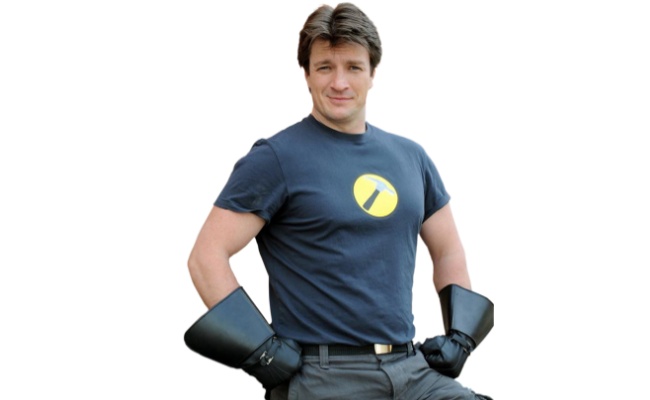 |
| Captain Hammer (Nathan Fillion) |
 |
| Dr. Horrible* (Neil Patrick Harris) |
If your characters have the depth that they deserve, you may find that your villain is just as sympathetic (if not more so) than your hero. Don't be afraid to give him (or her) the lead role for a little while. The results may surprise you.
*Side note: if you have never watched Dr. Horrible's Sing-Along Blog, go do it right now. Seriously, go.
Wednesday, September 2, 2015
Without Utopia I Never Would Have...
I haven't mentioned it here yet, but UtopiaCon is a most amazing and wonderful conference. They're on their fifth year of hosting the conference. My first year attending was last year. We who have experienced the magic that is Utopia want to give back to the organizers who have given so much inspiration and support to us. A conference of this magnitude--of this level of MAGIC--is not cheap.
In the past, organizers, friends, and even family have come forward and given from their own personal funds in order to help move Utopia forward another year and we want to pay them back. We want to FIGHT FOR OUR WRITE and do our part to help.
In the past, organizers, friends, and even family have come forward and given from their own personal funds in order to help move Utopia forward another year and we want to pay them back. We want to FIGHT FOR OUR WRITE and do our part to help.
This year especially, we'd like to make sure they go into planning sessions with an extra boost to it's bottom line.
So if you've ever been touched by Utopia, or if you love any of the authors, bloggers, or readers who have, please take a moment to give a few dollars. This will insure the inspiration continues.
We hope you'll be led to give from the heart, but to sweeten the deal we have some MAJORLY EPIC incentives! In addition to what you’ll get from the Go Fund Me organizers (see the donation page to read about those), you’ll also get entered to win any one of these amazing raffle prizes listed in the rafflecopter below!
Prizes like this one:

And in order to help convey the magical sense of community Utopia has instilled in its attendees, I want everyone to know that...

There is no purchase or donation necessary to enter to enter the drawing, but we encourage you to give even just $10 in order to help move us toward our big goal. And don’t forget, every donation of at least $10 earns you free books!
How to enter:
Participating Blogs:
Karen Hooper http://karenamandahooper.blogspot.com/
Kallie Ross Kallieross.com
Susan Burdorf www.facebook.com/susanburdorfauthor
Jo Michaels http://jomichaels.blogspot.com
Carlyle Labuschagne Www.worldsawaybookblog.blogspot.com
Shantella Benson https://thewordsmithe.wordpress.com/
Shelley Custer www.stalkingshelves.blogspot.com
S.M. Boyce smboyce.com/boyce-blog
Komali da Silva www.komalidasilva.com
PK Hrezo Http://Pk-Hrezo.blogspot.com
Elisabeth Kauffman http://writingrefinery.blogspot.com
Patti Larsen www.pattilarsen.com
Michaela Mills http://www.michaelamillswrites.com/blog
Ginny Gallagher http://ginnygallagher.com/news/
Liz Long http://lizclong.com
Raine Thomas http://rainethomas.com
Stacey Marie Brown http://www.staceymariebrown.com/
Heather Hildenbrand http://www.heatherhildenbrand.com
Amy Evans http://amyevansbooks.com/
Again, you can click this link to enter the raffle! I hope you'll support this awesome group, and consider attending! I promise it'll change your life.
So if you've ever been touched by Utopia, or if you love any of the authors, bloggers, or readers who have, please take a moment to give a few dollars. This will insure the inspiration continues.
We hope you'll be led to give from the heart, but to sweeten the deal we have some MAJORLY EPIC incentives! In addition to what you’ll get from the Go Fund Me organizers (see the donation page to read about those), you’ll also get entered to win any one of these amazing raffle prizes listed in the rafflecopter below!
Prizes like this one:

And in order to help convey the magical sense of community Utopia has instilled in its attendees, I want everyone to know that...

There is no purchase or donation necessary to enter to enter the drawing, but we encourage you to give even just $10 in order to help move us toward our big goal. And don’t forget, every donation of at least $10 earns you free books!
How to enter:
- Go visit #UtopiaLove’s Go Fund Me page and make a small donation (this isn’t necessary, but we would be so jazzed if you did this first! AND this earns you an automatic prize based on your donation level. Check your email to collect.)
- Click through any one of the rafflecopter entry methods. Complete the necessary item and get entered for all of the raffle prizes listed.
- Click through to the list of other participating authors & bloggers to read how Utopia has changed them!
Participating Blogs:
Karen Hooper http://karenamandahooper.blogspot.com/
Kallie Ross Kallieross.com
Susan Burdorf www.facebook.com/susanburdorfauthor
Jo Michaels http://jomichaels.blogspot.com
Carlyle Labuschagne Www.worldsawaybookblog.blogspot.com
Shantella Benson https://thewordsmithe.wordpress.com/
Shelley Custer www.stalkingshelves.blogspot.com
S.M. Boyce smboyce.com/boyce-blog
Komali da Silva www.komalidasilva.com
PK Hrezo Http://Pk-Hrezo.blogspot.com
Elisabeth Kauffman http://writingrefinery.blogspot.com
Patti Larsen www.pattilarsen.com
Michaela Mills http://www.michaelamillswrites.com/blog
Ginny Gallagher http://ginnygallagher.com/news/
Liz Long http://lizclong.com
Raine Thomas http://rainethomas.com
Stacey Marie Brown http://www.staceymariebrown.com/
Heather Hildenbrand http://www.heatherhildenbrand.com
Amy Evans http://amyevansbooks.com/
Again, you can click this link to enter the raffle! I hope you'll support this awesome group, and consider attending! I promise it'll change your life.
Friday, July 17, 2015
Review: Shadow Scale
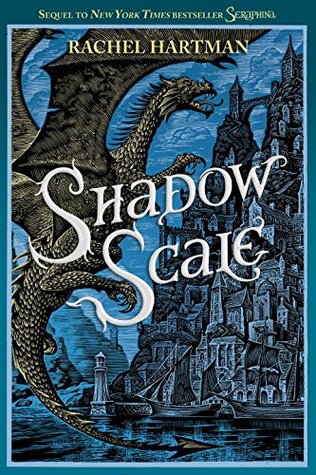
Some of the reviews for Shadow Scale indicated that the narrative would be disappointing, and so I was a little nervous going into the reading that I might come out of it feeling that something was missing. What I experienced, though, was exactly the opposite.
I loved this book, the dragon-lore, the scope and breadth of the plot (from gathering the ityasaari to the war between neighboring kingdoms), and most especially the high and low places that Seraphina's character walks through to come into herself fully and freely.
What I wanted, to see Seraphina become strong and independent, worthy of love and of loving, was exactly what Rachel Hartman delivered. Her last line "I walked myself into the world" perfectly encapsulates the journey that Seraphina traveled from those first pages until the end. For me, the story was always about that.
Thank you again, Ms. Hartman, for sharing Seraphina with us.
Wednesday, July 15, 2015
Review: Book Architecture
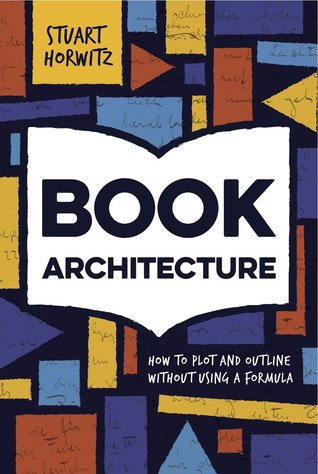
I recommend this book for people who want to break out of the "traditional" plot formula, or who have already and are now wondering how to make sense of their manuscript. Series, and tracking series in a grid, can help you identify the important elements of your narrative, and can help you organize those elements for maximum emotional and/or intellectual impact.
I'll be going back to read Blueprint Your Bestseller: Organize and Revise Any Manuscript with the Book Architecture Method
Wednesday, June 24, 2015
Review: Free to Fall
 Free to Fall by Lauren Miller
My rating: 4 of 5 stars
Loved it! Absolutely loved this book. Lauren Miller kept me reading, wondering what was coming next. I figured out a few of the "mysteries" based on clues she'd seeded into the narrative, but that just made it more fun for me to read, honestly. I had a silly fan girl moment at one point, when Miller wove Field of Dreams--my favorite movie--into the story. Seriously squealed with delight.
The inspirational message behind the whole book really speaks to me, an adult who hasn't quite decided to grow up yet... listen to that still small voice--to the Doubt as Miller describes it--the one that everyone tells you not to trust when really the Doubt would never steer you wrong. Ray in Field of Dreams listened and people thought he was crazy, but it was the right thing to do... Rory listens, and it's the hardest thing she's ever done, but again, it was the right thing to do! I need to be reminded of that more, to listen to the voice in my head, to not be afraid to follow my intuition, to chase after my passions.
I highly recommend this book.
View all my reviews
Friday, May 22, 2015
The last 10 YA books I read
Not counting the various manuscripts that have rolled across my desk in recent weeks, I read as much as I can in the YA category. My favorite genre is fantasy, but I have been known to read contemporary novels as well. I find reading what's somewhat current in the category of YA important to keeping my developmental editing skills sharp.
I recently had to list the last 10 YA novels I read along with a couple of sentences about what I liked or didn't like about those books... and I thought I'd share them with you! Have you read any of these books? Tell me what you thought of them!
The Bitter Kingdom, Rae Carson (third book in the Girl of Fire and Thorns Trilogy) - This last book of the trilogy was a bit of a letdown for me. Overall I enjoyed the story, but I felt like Elisa's character development took a back seat to the plot and, when THE THING that she thought made her special was taken away from her, instead of breaking down and being reborn, she had a couple of sullen days and then never really considered it again. I had hoped that Elisa would have a more explicit struggle with finding her self-worth separate from her godstone and so, while the plot resolved well, I still felt myself wanting something from the character arc.
The Tropic of Serpents, Marie Brennan (second in the Lady Trent Series)- Marie Brennan's, or more specifically Lady Trent's, narrative voice is what draws me to these books... I mean, aside from the dragons! The world building in this story is fascinating and learning through the eyes of a witty, strong female protagonist makes these books a pleasure.
The Absolutely True Diary of a Part-Time Indian, Sherman Alexie - I asked my friends to recommend books that dealt with the current racial climate in the US and someone recommended TATDoaPTI to me. This book was not at all what I expected. The protagonist was painful and broken and motivated and unique and fascinating. I genuinely cared about what would happen to him and enjoyed being able to see through eyes so completely different from my own.
The Iron Knight, Julie Kagawa (fourth book in the Iron Fey Series) - This fourth book in Kagawa's series seemed inevitable. Ash's story needed resolving and had to be resolved without Meghan. And yet... I wanted Meghan... I wanted more romantic tension (similar to the other three books). Ash's voice just didn't do it for me, although the interplay between him and Puck was entertaining.
The Iron Queen, Julie Kagawa (third book in the Iron Fey Series) - I loved watching Meghan grow into her own in this novel. Others complain about her whiny nature throughout the series, but I felt she was extremely relate-able. And I loved the romance! Also, Kagawa's take on the land of Faery and the summer and winter courts was rich and vivid.
Battle Magic, Tamora Pierce (Circle Reforged #3) - I read Will of the Empress by Pierce and was eager to re-enter the world she had created, so I grabbed this book from the library and devoured it. I love her characters, so full of nuance, and I love the magic systems in this series.
Me and Earl and the Dying Girl, Jesse Andrews - This was another recommendation from a friend that I enjoyed, if cringingly... most high school boys are... painfully awkward... and were definitely written that way in this book. After having read TFiOS, the "dying girl" in this story didn't carry the same weight, but I thought that the character development of the protagonist was worth the time I put in to read it.
Crown of Embers, Rae Carson (second book in the Girl of Fire and Thorns Trilogy) - Carson did a great job of raising the stakes and pushing the romance in this book. I ate it up and was so excited to read the third book and find out how Elisa was going to save her kingdom and her lover.
Ruin and Rising, Leigh Bardugo (third book in the Girsha trilogy) - These books fascinated me from start to finish. The Darkling was the yummiest, most horrifying villain I've read in a while, equal parts seduction and terror... Alina was an interesting and flawed heroine... and the pseudo-Russian landscape was so enthralling and different! I loved it. Great series.
The Fault in Our Stars, John Green - I read this because it was such a big deal in the YA scene, not because it's my normal fare. That said, I found Hazel very sympathetic and yes, I cried... more than once... while reading the story. Green wrote a compelling story about sick teenagers who were just trying to live normal lives, without holding back or being afraid to take risks. I can see why it was a hit with the target audience.
I recently had to list the last 10 YA novels I read along with a couple of sentences about what I liked or didn't like about those books... and I thought I'd share them with you! Have you read any of these books? Tell me what you thought of them!
The Bitter Kingdom, Rae Carson (third book in the Girl of Fire and Thorns Trilogy) - This last book of the trilogy was a bit of a letdown for me. Overall I enjoyed the story, but I felt like Elisa's character development took a back seat to the plot and, when THE THING that she thought made her special was taken away from her, instead of breaking down and being reborn, she had a couple of sullen days and then never really considered it again. I had hoped that Elisa would have a more explicit struggle with finding her self-worth separate from her godstone and so, while the plot resolved well, I still felt myself wanting something from the character arc.
The Tropic of Serpents, Marie Brennan (second in the Lady Trent Series)- Marie Brennan's, or more specifically Lady Trent's, narrative voice is what draws me to these books... I mean, aside from the dragons! The world building in this story is fascinating and learning through the eyes of a witty, strong female protagonist makes these books a pleasure.
The Absolutely True Diary of a Part-Time Indian, Sherman Alexie - I asked my friends to recommend books that dealt with the current racial climate in the US and someone recommended TATDoaPTI to me. This book was not at all what I expected. The protagonist was painful and broken and motivated and unique and fascinating. I genuinely cared about what would happen to him and enjoyed being able to see through eyes so completely different from my own.
The Iron Knight, Julie Kagawa (fourth book in the Iron Fey Series) - This fourth book in Kagawa's series seemed inevitable. Ash's story needed resolving and had to be resolved without Meghan. And yet... I wanted Meghan... I wanted more romantic tension (similar to the other three books). Ash's voice just didn't do it for me, although the interplay between him and Puck was entertaining.
The Iron Queen, Julie Kagawa (third book in the Iron Fey Series) - I loved watching Meghan grow into her own in this novel. Others complain about her whiny nature throughout the series, but I felt she was extremely relate-able. And I loved the romance! Also, Kagawa's take on the land of Faery and the summer and winter courts was rich and vivid.
Battle Magic, Tamora Pierce (Circle Reforged #3) - I read Will of the Empress by Pierce and was eager to re-enter the world she had created, so I grabbed this book from the library and devoured it. I love her characters, so full of nuance, and I love the magic systems in this series.
Me and Earl and the Dying Girl, Jesse Andrews - This was another recommendation from a friend that I enjoyed, if cringingly... most high school boys are... painfully awkward... and were definitely written that way in this book. After having read TFiOS, the "dying girl" in this story didn't carry the same weight, but I thought that the character development of the protagonist was worth the time I put in to read it.
Crown of Embers, Rae Carson (second book in the Girl of Fire and Thorns Trilogy) - Carson did a great job of raising the stakes and pushing the romance in this book. I ate it up and was so excited to read the third book and find out how Elisa was going to save her kingdom and her lover.
Ruin and Rising, Leigh Bardugo (third book in the Girsha trilogy) - These books fascinated me from start to finish. The Darkling was the yummiest, most horrifying villain I've read in a while, equal parts seduction and terror... Alina was an interesting and flawed heroine... and the pseudo-Russian landscape was so enthralling and different! I loved it. Great series.
The Fault in Our Stars, John Green - I read this because it was such a big deal in the YA scene, not because it's my normal fare. That said, I found Hazel very sympathetic and yes, I cried... more than once... while reading the story. Green wrote a compelling story about sick teenagers who were just trying to live normal lives, without holding back or being afraid to take risks. I can see why it was a hit with the target audience.
Tuesday, April 7, 2015
Big News for Writing Refinery!

The special thing about this anthology is that each submission has to use a writing prompt generated by the Writer Igniter App. That means you have to stretch that creative muscle extra hard. I can't wait to hear what new stories come out of this project.
So come check it out! Submissions are OPEN. We're looking for new voices and creative ideas. Come! Write! Take a chance with us and get your name in print. We wanna read your best creative stories. So write, write, write! And then submit, submit, submit!
Friday, March 6, 2015
It's Writing Prompt Friday!
I'm starting a new event on the Writing Refinery Facebook Page today: Writing Prompt Friday!
I'll cross-post here, too, so that everyone can participate. The idea is, look at the prompt, and write 1000 words or less, just a short piece, that incorporates the prompt. You can post a link to your piece in the comments and I'll make sure to come give you some encouraging feedback!
Here's today's prompt:

I'll cross-post here, too, so that everyone can participate. The idea is, look at the prompt, and write 1000 words or less, just a short piece, that incorporates the prompt. You can post a link to your piece in the comments and I'll make sure to come give you some encouraging feedback!
Here's today's prompt:
Friday, February 27, 2015
Pro tip: Nodding and Shaking Your Head
I've run across the incorrect descriptions of these two actions far too many times for it to be coincidental anymore, so today let's define them.
 The action that can be described in the above photo is nodding. Dear 10th Doctor David Tennant is nodding his head in response to something that was said to him. Nodding, the up-and-down motion of the head, is used to indicate affirmation, a positive response, a yes in body language.
 In THIS photo, DT is moving his head from side to side, or shaking his head. This motion indicates denial, a negative response, or no in body language.
This is basic body language 101. If you write that your character shakes his head yes to something... that's incorrect. He NODS his head for yes and SHAKES his head for no.
This is basic body language 101. If you write that your character shakes his head yes to something... that's incorrect. He NODS his head for yes and SHAKES his head for no.
Thursday, January 29, 2015
Creation is messy
If there's anything being an artist will teach you, it's that you've got to make a mess in order to create. The same is true with writing your novel. It's no less a piece of art in progress than a painting. Sometimes in order to get to the heart of your story you have to write yourself into a corner you aren't sure you'll be able to get out of... this is the novelist's version of a "mess". Then give yourself and your characters a chance to figure out how to get out of the mess you're in. Some of your most creative work can come out of this mess, out of this not knowing what comes next, out of this paint splatter that you didn't intend.
Let go of your need to control every single moment and see what happens with your writing. You may surprise yourself.
Let go of your need to control every single moment and see what happens with your writing. You may surprise yourself.
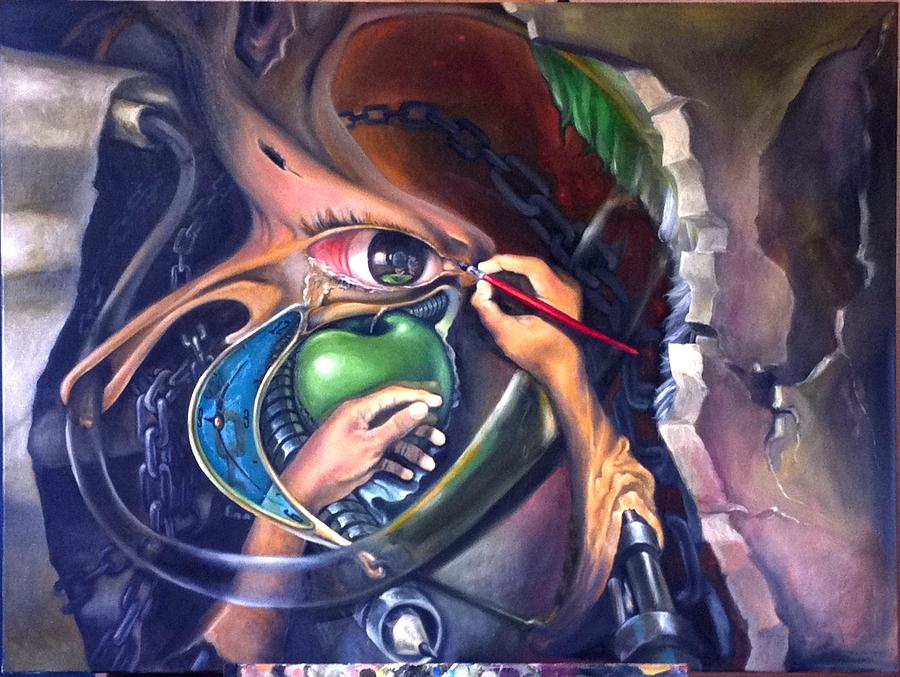 |
| mess of life by jesus miguel rosado perdomo |
Tuesday, January 27, 2015
Try something new
In the search for inspiration, the best thing you can do is to keep trying new things.
Read something in a different genre than you usually do.
Go to an art museum.
Write in a different place.
Take a modern dance class.
Do something that makes you consider your world, the world, differently than you would normally. Do something that makes you ask questions. Look at art that makes you uncomfortable and then ask yourself why it makes you uncomfortable. Ask yourself why a lot.
Live in a state of constant questioning and keep blurting out answers until you find one that sticks... until you find one you can't get out of your mind, then follow it and see where it leads you.
Read something in a different genre than you usually do.
Go to an art museum.
Write in a different place.
Take a modern dance class.
Do something that makes you consider your world, the world, differently than you would normally. Do something that makes you ask questions. Look at art that makes you uncomfortable and then ask yourself why it makes you uncomfortable. Ask yourself why a lot.
Live in a state of constant questioning and keep blurting out answers until you find one that sticks... until you find one you can't get out of your mind, then follow it and see where it leads you.
Subscribe to:
Posts (Atom)