Showing posts with label fiction. Show all posts

Friday, September 11, 2015

In Defense of Prologues

star wars crawl prologue
A long time ago in a galaxy far far away... you know the line. But let's all admit it. We've read our share of bad prologues. Especially in sci-fi and fantasy, prologues get abused -- a lot. Show of hands: How many of you skip prologues without actually reading them? I thought so.

And it seems the publishing industry is over prologues. Most agents and editors nowadays will tell you to cut that prologue right out of your WIP. Or worse, they won't even look at a manuscript if it has a prologue.

Still, just because prologues get abused and overused so much, doesn't mean they're worthless. Before I get to defending them, though, let's go over a couple of things a prologue is NOT.

A prologue is not...

  • a place to store irrelevant back story and force it on your readers.
  • a scene that happens in the same time/place as your story (usually)
  • written from the main POV of your story (also, usually)
In most cases, novels don't need prologues. The information they contain can usually be dispersed throughout the first chapter without breaking the flow of the narrative.

But occasionally prologues are the perfect place to showcase a piece of necessary information, or a voice that would otherwise not be included. The prologue to Patrick Rothfuss's The Name of the Wind, for example, gives us a wider, more omniscient view of the character Kote. Without spilling all the beans at once Rothfuss sets the tone for the novel and for how we should view his main character, a detail that is very important to the telling of the story. 

Star Wars is the perfect example of a prologue being put to good use. At the time that the movies released, science fiction was a relatively unfamiliar genre for the general public. The prologue, therefore, was crucial in setting the overall tone, outlining the basic rules of the universe, and orienting people with the main conflicts that the characters will face.

When well done, a prologue draws us into the story. It cracks the lid on all the juicy awesomeness that's yet to come, calls to our curiosity, and whets our appetites for adventure.

Thursday, September 10, 2015

Writing Tips: 3 Reasons NOT to Begin Your Novel With a Dream or a Flashback

Figuring out where to start your novel can be difficult. Where your readers enter the story, what they see, who they meet, will color the way they view the rest of the novel. The first few pages are where the reader gets their footing and learns just what the story is all about, where it's going to take them, whether or not they should trust the voice that is taking them through this foreign story land.

Sometimes, when you're not sure just how you should start your novel, it can seem like a good idea to start with a dream or a flashback, your character remembering something that happened before the reader came along, or something that never happened at all. There are 3 reasons not to do this.

  1. The Confusion Factor
    In the first five pages of the novel, you should be setting up your reader's expectations of the character and world that they're going to be sharing with you for the next 200 pages. If you then suddenly shout "just kidding!" and change everything that they know or thought the novel was going to be about, you risk at worst losing their interest, and at least confusing them. 
  2. It's been done (and done and done and done)
    You want your story to stand out in your reader's mind. You want to grab people's attention and hold it. If you resort to this trick that everyone else has tried, how well are people going to remember your book in the midst of all the others? Be worth remembering. It may take a little more work, but it's worth it!
  3. If it's a flashback, why didn't you just start there in the first place?
    If you absolutely have to start us in the "past" and then jump forward, ask yourself why? Why didn't you just start us there in the first place? For a flashback to work at the very beginning of a novel, the event you're taking us back to must be pretty earth-shattering for your character, but then not matter at all until the current time. The fall of Voldemort and Harry's arrival at the Dursleys' home were both HUGE to the plot of Harry Potter. So J.K. Rowling, instead of having a character remember those moments later, plunked the reader down right there in the moment. She started with a deeply significant event and showed it to her readers, and by doing so, those events had more impact.
Finally, you can choose to do a flashback or a dream at the beginning. If it's right for your book, it's right for your book. But you've gotta wow us with it. Make it a flashback or dream to remember!

Friday, September 4, 2015

Writing Tips: Hero vs. Protagonist

When crafting your novel you need three things:
  1. A character
  2. A goal
  3. A problem
Your main character (protagonist) has a goal, something they want more than anything else, but something is standing in their way. In order to get what they want, they have to solve the problem/defeat the monster/overcome the odds. And voila, there's your story.

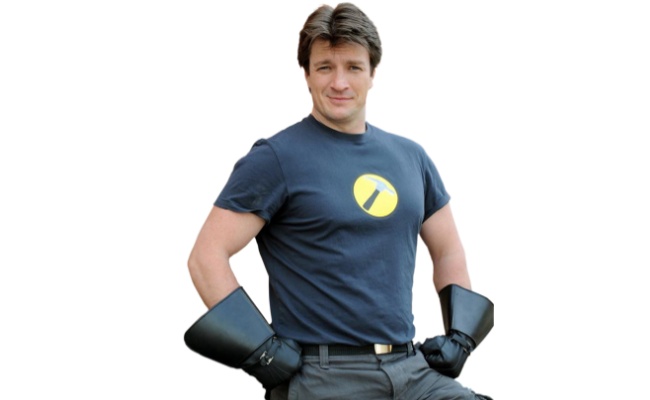
Captain Hammer (Nathan Fillion)
Usually people equate the protagonist with the hero of the story. Even a flawed main character can be the good guy, admired for their bravery, fighting "on the side of the angels." A hero makes sacrifices for others, and often has a sympathetic quality that makes you want them to succeed.

Dr. Horrible* (Neil Patrick Harris)
But what makes a protagonist is not always what makes a hero. Sometimes the most sympathetic character, the one with the most compelling goal, with the most to gain or lose (i.e. the most interesting story) is NOT the hero. It's important to remember that the hero stands in the way of the villain, too, and is ruthless in seeking his destruction. Sometimes, when you put yourself in the shoes of Grendel you find that Beowolf is the true monster.

If your characters have the depth that they deserve, you may find that your villain is just as sympathetic (if not more so) than your hero. Don't be afraid to give him (or her) the lead role for a little while. The results may surprise you.

*Side note: if you have never watched Dr. Horrible's Sing-Along Blog, go do it right now. Seriously, go.

Wednesday, June 24, 2015

Review: Free to Fall

Free to FallFree to Fall by Lauren Miller
My rating: 4 of 5 stars

Loved it! Absolutely loved this book. Lauren Miller kept me reading, wondering what was coming next. I figured out a few of the "mysteries" based on clues she'd seeded into the narrative, but that just made it more fun for me to read, honestly. I had a silly fan girl moment at one point, when Miller wove Field of Dreams--my favorite movie--into the story. Seriously squealed with delight.

The inspirational message behind the whole book really speaks to me, an adult who hasn't quite decided to grow up yet... listen to that still small voice--to the Doubt as Miller describes it--the one that everyone tells you not to trust when really the Doubt would never steer you wrong. Ray in Field of Dreams listened and people thought he was crazy, but it was the right thing to do... Rory listens, and it's the hardest thing she's ever done, but again, it was the right thing to do! I need to be reminded of that more, to listen to the voice in my head, to not be afraid to follow my intuition, to chase after my passions.

I highly recommend this book.

View all my reviews

Tuesday, January 27, 2015

Try something new

In the search for inspiration, the best thing you can do is to keep trying new things.

Read something in a different genre than you usually do.

Go to an art museum.

Write in a different place.

Take a modern dance class.

Do something that makes you consider your world, the world, differently than you would normally. Do something that makes you ask questions. Look at art that makes you uncomfortable and then ask yourself why it makes you uncomfortable. Ask yourself why a lot.

Live in a state of constant questioning and keep blurting out answers until you find one that sticks... until you find one you can't get out of your mind, then follow it and see where it leads you.


Tuesday, September 2, 2014

6 Questions with James Hunter-Shortland, Fantasy Cartographer

Today I'm excited to share with you 6 questions with fantasy cartographer James Hunter-Shortland! Thanks for sharing with us, James!

Would you please describe what a fantasy cartographer is for people who might not know? Who needs this?
A fantasy cartographer is essentially an artist who makes maps of fictional places or time periods. We're not to be confused with "proper" cartographers, who create maps of Earth using techniques such as GIS (geographical information systems) - they train for a long time and their work is more of a science than an art (though they might disagree). Fantasy cartographers are mainly semi-professional and self-trained. As far as I know, there are no courses or qualifications you can go out and get if you want to create fantasy maps.

The main communities who need fantasy maps are fantasy authors and RPG companies/creators. Sometimes video game developers will have a need for a fantasy map for their game (think Elder Scrolls, Witcher 3, Dragon Age) but most have in-house art teams who will design those. Recently, another cartographer was commissioned to design a tie-in map for the movie After Earth. I was even contacted by an individual who needed "old map" sets of slides for a corporate presentation. So there are lots of possibilities and you never know where the next request is going to come from.

How did you get started doing fantasy cartography? and Why?
I pretty much stumbled into fantasy cartography out of necessity. I was about twelve when I started writing a fantasy novel and realized I wanted a map to go with it. I had grown up with great stories like The Hobbit, LOTR and a series called Redwall, all of which featured these beautiful old style maps inside. I started out imitating my favorite maps, with nothing more at my disposal than a piece of paper and a pencil. Over the years I started to experiment with graphics software. My earliest experience of Photoshop and GIMP was taking movie posters, applying various effects to them and changing the layout. Eventually, I realised that if I could import my maps into PS/GIMP, maybe I could get a better final result than I could achieve by hand.

I don't remember when or how, but at some point I came across the Cartographer's Guild, which is a fantastic online community of fantasy cartographers. There are so many great tutorials on there for all kinds of styles of maps. I started tearing through those tutorials to see what kind of maps I could make. Up until a couple of years ago, I was only making maps for my personal writing projects. It's only recently that I started to make maps on commission.

What's the easiest part? What's the hardest part?
That's a tricky one! I'd say the easiest part of making a map is working out where everything goes and how it all fits together. For example, mountains are like the backbone of a continent and everything else flows down out of them. Rivers are at the mercy of gravity, so they always take the least difficult path, which is usually downhill and around obstacles, not through them. Forests grow around rivers and lakes and so on. Once you get all the rules straight in your head, it becomes easier to know how everything needs to be set out.

The hardest parts, at least for me, are labeling (place names) and anything that requires me to draw anything more than mountain and tree markers! Firstly, map labels are time consuming as there are usually a lot of them. And drawing - I'm a horrible "traditional" artist. While some fantasy cartographers are also great at painting or drawing, I really focus on using digital applications to achieve all my effects. That isn't to say I don't do any manual drawing when I design a map. I do own a graphics tablet which I use to draw in landmasses, create geographic markers and to shade/add in fine details.

What's the most fun project you've worked on recently?
Projects are always a heady mixture of self-doubt, fun and perseverance. There are elements of certain projects I have enjoyed hugely and there are others that I have hated with a passion. There are two projects that come to mind where I really had a fun time.

First was my entry to the One Page Dungeon contest (this year was judged by Ernie Gygax, the son of the late Gary Gygax), "In the Vault of the Howling Palace". I made this weathered paper type thing that was designed to be a page from the journal of a master thief. Needless to say, I didn't win in any category, but I really enjoyed designing that page.

Second was a map called Tar Ebon which I made on commission for author Dayne Edmondson. He had this huge write-up for his world that he emailed to me, which I really enjoyed reading and helped me shape his map. I just really love the colors and the feel of that map - it's a world that I would really love to explore.

How can people contact you if they want to know more?
For more, you can visit my website, The Fantasy Cartographer, or head over to my deviantArt page. I also recently launched my Facebook page so I'd really appreciate some Likes!

What are you currently reading? (Or what's the last book you read?)
I'm currently reading The Lies of Locke Lamora by Scott Lynch and really enjoying it. I also devour non-fiction history books - if there's a castle or a Roman, I'm sold!

--
Thanks so much, James!

Thursday, July 3, 2014

P is for Why Point of View Matters in Your Novel

This post is part of my ABC's of Writing Well series. We're skipping O for now and heading directly to P because Point of View is on my mind and I want to talk about it! Ha!

Point of view, when it's targeted correctly, when the author is truly immersed in the voice and character on the page, can create vivid, emotional pictures like this:
The Quorum chamber is low ceilinged and windowless, like a tomb. Candles flicker from sconces set in dusty mortar between gray stones. A squat oak table fills the center, surrounded by red cushions. The air is thick with unyielding silence, and I feel as though the ghosts of weighty decisions and secret councils press in around me, telling me to hush.
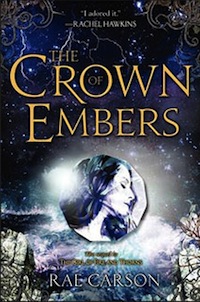
Rae Carson, in The Crown of Embers, pulls on her main character's skin to conjure up this slice of perspective on a room in the palace. The room feels oppressive, suffocating, not because it actually IS that way, but because of the perspective and the emotional baggage that the main character carries with her when she crosses the threshold. You can feel her dread and at the same time her need to prove herself, to break free of those who want to use her insecurity to control her.

You'll notice that Carson is writing in first person, a popular method of storytelling in YA fantasy and dystopia these days. First person perspective highlights the advantages of effective point of view in narrative. Using a first person perspective limits your options. You really can't slip into a minor character's perspective or cheat and give the reader details that your main character would never know, wouldn't care about, or wouldn't notice. You ARE your main character. You see what she sees. You tell us what she feels in the moment, and the effect is that the reader is drawn deeply into the scene and into a relationship with the main character.

The thing that's REALLY hard to wrap your head around is that, in order to truly find your story's voice, you have to do those things no matter which POV you choose. Even in third person you can (and should) put on your character's skin and dip into her emotions, using her past and present experiences to illuminate the scene before you. That is what makes inspired writing.

And now for the obligatory example from the pages of Harry Potter and the Order of the Phoenix:
Harry dropped his gaze to the chair in the center of the room, the arms of which were covered in chains. He had seen those chains spring to life and bind whoever sat between them. His footsteps echoed loudly as he walked across the stone floor. When he sat gingerly on the edge of the chair the chains clinked rather threateningly but did not bind him. Feeling rather sick he looked up at the people seated at the bench above.
J.K. Rowling taps into Harry's memories and emotions to paint a picture of the witness stand in the Wizengamot that chills the bravest, most defiant spirit. You can feel Harry's anxiety, his powerlessness in the moment. He is at the mercy of people and powers that are at best disinterested, and at worst invested in his destruction. She doesn't have to tell us these things for us to figure them out. We read it in what Harry notices, what he remembers, and how he reacts to his environment and to the other characters in the scene.

The third person POV advantage is that you can occasionally slip into other characters' heads and write from their perspective as well. But you have to be choosy. Really examine why you need that character's perspective to paint your picture. If you can't come up with a compelling reason for using a character's perspective, stick to your main character. Otherwise you risk diluting the narrative and losing your reader in the process.

If you're having trouble with this, if you find that you keep straying from your main character's point of view into other character's heads, maybe it's time to re-evaluate the story, up the stakes to refocus your narrative and your main character's goals, or decide if your main character is really your main character. It's possible that the story belongs to someone you thought was in the background. Stranger things have happened.

Monday, April 28, 2014

Guest-blogging at DIY MFA!

Today I have a guest post on the DIY MFA community blog. Hop on over and check out my article "Why Hire a Freelance Editor?" Then leave me a message in the comments!

DIY MFA (Do It Yourself Masters of Fine Arts) is a great writers' resource center, with tools and tips for doing your best creative work. They host webinars and courses to help you on your way to a successful writing career. Stop in and see what they have for you!

Thursday, January 23, 2014

M is for Motivation

Motivation, as defined by Merriam Webster:  the act or process of giving someone a reason for doing something : the act or process of motivating someone

: the condition of being eager to act or work : the condition of being motivated

: a force or influence that causes someone to do something

Motivation, as it pertains to writing, can take two forms. First, there's character motivation. I'm going to focus on villains here, because they usually get written as bad for the sake of being bad... and that's not always the best, most powerful, or most plausible way to write a villain.

Understanding your villain's motivations with regard to their actions will not only help you to decide what they do next, it will help your readers understand WHY they do what they do. Readers find "WHY?" very important, and if they don't understand "WHY?" they're liable to lose interest in your story relatively quickly.

It is possible to write a character that has no discernible motivations for their actions (take Iago in Othello, for example). We're not all Shakespeare, though... And even Iago's motivations can be teased out of the play if you want to look VERY deeply into it.

Instead, show us why your villain is bad. What does he stand to gain from his actions? Give us a snapshot of what happened in her past that made her the way she is. Take Voldemort, for example. Throughout the entire Harry Potter Series his most simple and immediate goal has been to kill Harry. Understanding WHY is very important, though, for Voldemort's actions to make any sense to the reader. Also, Harry didn't initially have to understand WHY Voldemort wanted to kill him. But in order to eventually defeat Voldemort, Harry would have to learn everything he could about his nemesis's motivations.

In its other sense, MOTIVATION applies to you, dear writer. Find your story. Make it something you're enthusiastic about. Because in order to succeed with your story, you're going to be spending a LOT of time with it. And if you're not motivated by the sheer joy of being with your story, you're going to find the process of writing, editing, and publishing a very arduous one indeed.

Good luck and happy tales.

Monday, November 4, 2013

L is for Language

When drafting your piece, be it short fiction or long, it's important to remember that the words you choose carry weight and that consistency of voice will add depth to your characters just as much as the actions and thoughts and feelings that those words convey.

When I'm writing a first draft, basically I'm grabbing at whatever words will do to get my point across. They're like place holders. The first draft is a marathon and LANGUAGE doesn't matter as much as getting the ideas down on paper.

When I'm editing, word choice becomes much more significant. The language I choose to describe a scene will greatly enhance the experience of the reader. Words hold powerful influence over how we perceive a character or setting.

Consider the following three examples taken from the first pages of three incredible books. (By the by, I'm moving in a few weeks, so all my Harry Potter books are already packed. These three books were chosen from what has not been packed yet.)

------------------------------------
The Hunger Games - Suzanne Collins
When I wake up, the other side of the bed is cold. My fingers stretch out, seeking Prim's warmth but finding only the rough canvas cover of the mattress. She must have had bad dreams and climbed in with our mother. Of course, she did. This is the day of the reaping.

I prop myself up on one elbow. There's enough light in the bedroom to see them. My little sister, Prim, curled up on her side, cocooned in my mother's body, their cheeks pressed together. In sleep, my mother looks younger, still worn but not so beaten-down. Prim's face is as fresh as a raindrop, as lovely as the primrose for which she was named. My mother was very beautiful once, too. Or so they tell me.

Sense and Sensibility - Jane Austen
The family of Dashwood had been long settled in Sussex. Their estate was large and their residence was at Norland Park, in the centre of their property, where, for many generations, they had lived in so respectable a manner, as to engage the general good opinion of their surrounding acquaintance. The late owner of this estate was a single man, who lived to a very advanced age, and who for many years of his life, had a constant companion and housekeeper in his sister. But her death, which happened ten years before his own, produced a great alteration in his hoe; for to supply her loss, he invited and received into his house the family of his nephew Mr. Henry Dashwood, the legal inheritor of the Norland estate, and the person to whom he intended to bequeath it. In the society of his nephew and niece, and their children, the old Gentleman's days were comfortably spent. His attachment to them all increased. The constant attention of r. and Mrs. Henry Dashwood to his wishes, which proceeded not merely from interest, but from goodness of hear, gave him every degree of solid comfort which his age could receive; and the cheerfulness of the children added a relish to his existence.

The Book of Flying - Keith Miller
I am dreaming. I'm dreaming of a city, a white city in the sun by the sea, a city of bells and birdcages, boatswains and ballyhoo, where heart-faced wenches lean bare-breasted from balconies to dry their hair among geraniums and the air is salt and soft and in the harbor sailors swagger from ships that bear cargos of spices. In this city a thousand doves live in the hundred towers of a hundred bells and in the mornings when the bell ringers toll a summons to the sun the doves scatter like blown ash across the tile roofs and light under eaves whispering lulling words to sleepers, bidding them stay in bed a little longer. And on the silver sky other wings rise.
-----------------------------------------

In each case above, the language employed by the author paints a distinct picture. The narrative voice and the setting are solidified through the words chosen to describe the action. Imagine the picture you would get if the opening passage of the Hunger Games was written in the style that Keith Miller uses for the Book of Flying. You might not feel Katniss's discontent or sense of urgency at all. Miller is painting us a picture of a beautiful land of enchantment. We couldn't imagine otherwise after reading those opening words.

Jane Austen's prose, far from being just a portrait of the times in which she lived, is calculated to give you an idyllic impression of the situation of the social class she is writing about, just before she smashes it all to pieces (ever so subtly and wittily, of course).

When they say a picture paints a thousand words... remember that a word, that LANGUAGE paints pictures as well. Choose your images with care.

Friday, November 1, 2013

K is for Kinesics

When you're writing, every pen stroke/keystroke/pencil scribble should exist to support the characters and/or the plot. Every stroke has meaning, down to the painstakingly selected word so imbued with context and flavor that you could not possibly avoid using it to describe your MC's eye color.

Which is why you really have to be a student of kinesics for your active prose to come alive.

Oxforddictionaries.com defines kenesics as:
  • "the study of the way in which certain body movements and gestures serve as a form of nonverbal communication."

As with any and all literary concepts, the key here is balance. The art of kenesics is to find a way to convey meaning with a movement. But you can't just show us your characters' movements. You also have to give us meaningful context for the movements. Here's an example from (who else?) J.K. Rowling in Harry Potter and the Deathly Hallows:
   "I'm going to wash," Harry told Bill, looking down at his hands still covered in mud and Dobby's blood. "Then I'll need to see them, straightaway."
   He walked into the little kitchen, to the basin beneath a window overlooking the sea. Dawn was breaking over the horizon, shell pink and faintly gold, as he washed, again following the train of thought that had come to him in the dark garden...
   Dobby would never be able to tell them who had sent him to the cellar, but Harry knew what he had seen. A piercing blue eye had looked out of the mirror fragment, and then help had come. Help will always be given at Hogwarts to those who ask for it.
   Harry dried his hands, impervious to the beauty of the scene outside the window and the murmuring of the others in the sitting room. He looked out over the ocean and felt closer, this dawn, than ever before, closer to the heart of it all.
   And still his scar prickled and he knew that Voldemort was getting there too. Harry understood and yet did not understand. His instinct was telling him one thing, his brain quite another. The Dumbledore in Harry's head smiled, surveying Harry over the tips of his fingers, pressed together as if in prayer.
The actions in this scene are relatively few, but they are powerful in their simplicity. Harry washing his hands after just burying his loyal friend... this is a symbolic act of sorrow as well as resolve. By the time Harry clears the dirt away he has a better picture of what he needs to do next in his quest to defeat Voldemort. There is no need for excess here... no mention of turning on or turning off the faucet, or rubbing his hands together, or wiping his face. Those actions would convey a different emotion than Rowling wants for Harry here. The quiet, contemplative act leaves you with a sense of Harry's resolve.

Here's another moment from earlier in the book, between Ron and Harry:
   The sword clanged as Ron dropped it. He had sunk to his knees, his head in his arms. He was shaking, but not, Harry realized, from the cold. Harry crammed the broken locket into his pocket, knelt down beside Ron, and placed a hand cautiously on his shoulder. He took it as a good sign that Ron did not throw it off.
   "After you left," he said in a low voice, grateful for the fact that Ron's face was hidden, "she cried for a week. Probably longer, only she didn't want me to see. There were loads of nights when we never even spoke to each other. With you gone..."
   He could not finish; it was only now that Ron was here again that Harry fully realized how much his absence had cost them.
   "She's like my sister," he went on. "I love her like a sister and I reckon she feels the same way about me. It's always been like that. I thought you knew."
   Ron did not respond, but turned his face away from Harry and wiped his nose noisily on his sleeve. Harry got to his feet again and walked to where Ron's enormous rucksack lay yards away, discarded as Ron had run toward the pool to save Harry from drowning. He hoisted it onto his own back and walked back to Ron, who clambered to his feet as Harry approached, eyes bloodshot but otherwise composed.

Kinesics is a practice closely related to beats in dialogue, in that they both contain character action. The point is to understand which actions will be the most effective in gathering up the emotional context of the scene and delivering it to your readers.

Tuesday, October 29, 2013

J is for Jargon

The Merriam-Webster's Collegiate Dictionary (11th Edition) lists the first definition for jargon as confused, unintelligible language.

While this definition holds true of a lot of first drafts (and quite a few of this blog's posts, admittedly), the definition I want to focus on is "the technical terminology or characteristic idiom of a special activity or group."

What more special group is there than your novel's cast of characters? How often to you find yourself writing dialogue (or exposition) that makes complete sense to you, that falls well inside the normal speech patterns for your characters, only to hear from your beta-readers that they have no idea what your characters are talking about?

Especially when you're writing fantasy, unique terms and phrases to describe objects or states of being are necessary! But the problem is how to introduce those terms, that jargon, without throwing your reader into a tailspin of confusion as they try to decipher exactly what your characters are trying to say.

Once again, I turn to the talented J.K. Rowling to illustrate what I believe to be a top-notch example of how to work jargon into accepted language for the reader.

"Where was I?" said Hagrid, but at that moment, Uncle Vernon, still ashen-faced but looking very angry, moved into the firelight.
"He's not going," he said.
Hagrid grunted.
"I'd like ter see a great Muggle like you stop him," he said.
"A what?" said Harry, interested.
"A Muggle," said Hagrid, "it's what we call nonmagic folk like them. An' it's your bad luck you grew up in a family o' the biggest Muggles I ever laid eyes on."

If you do this too often, unfortunately, you're going to overwhelm your reader and cause them to fall out of sync with the story. But! For the important terms, it's worth experimenting with ways to sneak the explanation in.

One thing to note about the definition of the word muggle here and all it's nuances the importance of characterization in helping to paint the picture of the term. Rowling has spent chapters by this point characterizing the Dursleys and their relationship with Harry so that when Hagrid labels them muggles, the implications of such a word reach far beyond nonmagic. So much so that when you hear the word muggle, do you not immediately thing of Dursley?

Take some time and create a list of the jargon you employ to build your world. Which meanings are obvious to your readers? Which are creating unnecessary confusion? How can you craft your narrative in such a way that the meanings of the words stretch beyond the literal definitions?

Wednesday, October 16, 2013

H is for Hyperbole

Hyperbole, if used correctly and sparingly, can convey a great depth of emotion. It is the use of exaggeration to make a point, to create emphasis.

People use hyperbole most often in everyday speech. "That bag weighs a ton." "I'm starving." "I died laughing." None of those statements is meant to be taken literally.

Choose your moments carefully, when using hyperbole. It's important for your readers to recognize when to take you at your word, and when you're just making a point.

No Harry Potter references this time. Sorry! I'll work him back in soon, though.

Monday, August 5, 2013

G is for Genre

Knowing the genre you're writing is important when you're crafting your novel. Genre is more than “a term for any category of literature or other forms of art or entertainment...” Genre is your novel's home.

Once you can accurately identify the genre you're writing in, all sorts of doorways and opportunities open up... and others close. A women's fiction novel, for instance, is not likely to include flesh-eating space aliens or a guild of ninjas. But a sci-fi novel would definitely have flesh-eating space aliens... and maybe even that ninja guild, too, if they are from the planet Zarkon on the edge of Galaxy 5. Giving yourself parameters to work within helps you better deduce which of the zillion options for your story are the most compatible and which are the most likely to make sense to your readers.

A lot of writers get cagey when asked to define the genre of their novel. It's like they don't want to commit... or they think that they can reach a wider audience if they use more than one genre in their query letter or manuscript description.

This is a big no-no, though. Agents and publishers will put aside a novel that claims to cater to more than one audience because it seems to signal a lack of vision. A targeted audience and a well-defined genre are a must for query letters. If your book is as amazing as you know it is, it will shine in chosen genre and then from there other types of readers will likely pick it up.

There are SOOOOooo many genres and sub-genres to choose from, too. There's no need to feel limited by having to choose one and run with it. So as you're writing, consider your characters, consider how and where your story fits in the marketplace (HINT: this is important for self-publishers as well).

So what genre are you writing in today?

Here are a few suggestions! Can you think of more? Action and Adventure, Chick Lit, Children’s, Contemporary, Crime, Erotica, Family Saga, Fantasy, Dark Fantasy, Gay and Lesbian, General Fiction, Graphic Novels, Historical Fiction, Horror, Humour, Literary Fiction, Military and Espionage, Mystery, Picture Books, Religious and Inspirational, Romance, Science Fiction, Thrillers and Suspense, Western, Women’s Fiction, Young Adult.

Friday, August 2, 2013

F is for Feedback

Ok, so here's a step away from the elements of a novel. This one is more focused on the editorial process.

Feedback.

I'm talking about taking your precious work that you've been slaving over for months (years for some of us) and sharing it with people whose opinions you trust and who can give you honest, constructive criticism for how to improve upon the clarity, structure and style of your work.

I  know, it's a scary prospect. I have yet to show anyone more than the smallest taste of my own manuscript because I already know what the feedback will be.

Unfortunately, the main problem I see with manuscripts in the slush pile is lack of feedback. A manuscript that has been read and vetted by trusted critique partners and/or professionally edited has a lot better chance rising above the rest of the slush. A lot of authors would save themselves a giant helping of humble pie if they would only take the time to get feedback on their work and then put that feedback to work in a revision (or 10).

What's your process like? Do you have trusted critique partners that you go to?

Thursday, August 1, 2013

E is for Entry point

Entry point is where your story begins... When we crack the book open and read the first page, what is your character doing?

Do we begin at the beginning? “In a hole in the ground there lived a hobbit. Not a nasty, dirty, wet hole , filled with the ends of worms and an oozy smell, nor yet a dry, bare, sandy hole with nothing in it to sit down on or to eat: it was a hobbit-hole, and that means comfort." In The Hobbit, J.R.R. Tolkien begins by explaining Bilbo to the readers. It is our first encounter with a hobbit after all. Through the first chapter, as the action unfolds, Tolkien characterizes Bilbo so solidly that we end up with a vibrant picture and well-defined expectation of what Bilbo is like. And then he does something unexpected. The adventure is just about to begin... and what an adventure!

Are we in the middle of the action? “My husband’s mistress leveled the gun at me. Her perfect, blonde curls bounced as she took a firing stance in the doorway to the conference room. Our eyes met over the gun, and the alien clone holding me, hitched up my arm to use me as a shield. The clone adjusted the quiack knife against my neck to make sure I knew he meant it. My husband’s mistress, Trish, puffed her bangs out of the way and squeezed the trigger." This was the beginning of a novel written by my blogging friend, the amazing and talented Rena. I won't go into the reasons why she changed her entry point, but this, as one of her previous options, illustrates the idea of jumping RIGHT into the action. We learn a lot of details rather quickly about the characters and have immediate tension and excitement to draw us further into the story.

Does the narrative start in the past (to set the stage) and then jump to the present? The best example of this is still Harry Potter and the Sorcerer's Stone Chapter 1. Other examples frame this kind of entry point as a prologue. Example: Seraphina by Rachel Hartman, “I remember being born. In fact I remember a time before that..." Depending on the amount of back story you need to set up your reader's understanding of the current action, this can be a good idea... or it can be a bad idea. If the information in a prologue needs so very much to be part of the story, you might want to consider ... making it part of the story!

Entry points can and do change over the course of drafting and revising. Sometimes skipping the set-up and heading straight for the action is the best thing you can do to jump-start a lagging narrative. Other times the set-up, artfully done, is required to help attach your reader to the main character. How does the current entry point of your WIP set the stage for your novel?

Tuesday, July 30, 2013

C is for Conflict

Every good story has conflict. The trick is how you utilize it. Conflict can help your character grow, can give her something to overcome, can peak the reader's interest in the plot. If your character always gets everything she wants without having to fight for it, that can make for a really short, or a really boring story.

Conflict adds intrigue, creating tension in the narrative. It comes in many shapes and forms, both internal and external.
(wo)man vs. (wo)man - Harry vs. Voldemort; Ulysses vs. Medusa; Hector vs. Achilles... in each of these instances the villain is (eventually) corporeal, someone that must be defeated to ensure the hero's survival. The odds are stacked against the hero and he will have to use all his wits to gain the skills necessary to overcome his foe.

(wo)man vs. nature - Katniss vs. the Hunger Games arena... technically this is woman vs. a machine taking the form of nature, but you get the point. Fire and rain, lack of water and food, tracker-jackers, mockingjays, and muttations, all these "natural" forces test Katniss's skills and ability to survive, and teach her about herself (and the reader about her).

(wo)man vs. self - Ista vs. herself (Paladin of Souls, by Lois McMaster Bujold... love her, btw)... In this lovely novel Ista has to learn to move past the trauma she has experienced and allow herself to be open to using her gifts for the good of other characters in the story. The external conflicts here are secondary to the internal conflict, and her character grows and changes in beautiful ways by “The End."

Knowing your character's back story can help you discern when conflict will come up (ex: Hermione's muggle-born status fuels her desire to excel; Sirius and Snape's past animosity causes clashes when they are forced to work on the same side; Snape's love for Lily Potter motivates him to agree to protect her son, but his hatred for James Potter makes him antagonize Harry at every opportunity). The best conflict has a reason, even if it never has a resolution. Snape never forgave Harry for being James' son and it's hard to tell if Harry ever forgave Snape for killing Dumbledore... but the poignancy of the emotions that the conflict between those two characters creates is one of the most memorable aspects of that series.

So what conflicts arise in the lives of your characters (major OR minor)?


Saturday, July 27, 2013

B is for Backstory

(Cross posted from Fairbetty's World)

Back story is a tricky topic. You can't live with it and your MC can't live without it! The term “Back story" encompasses all those things that may have happened to your main character (or to the townspeople he's trying to help) before we meet him in the first pages of your book.

Take the first chapter of Harry Potter and the Sorcerer's Stone**. J.K. Rowling sets the stage and the characters for her epic YA series in the first chapter and reveals a surprising amount of back story to her readers succinctly and with masterful characterization and style. By the end of chapter one we know all we need to know about the Dursley family and have tantalizing bits about Dumbledore, McGonagall, and Hagrid to carry us further into the story... as well as some crucial details about Harry Potter himself. Chapter two begins ten years later! We don't get any detail about what those ten years entailed, and we don't really need them because the characterization of Harry and the Dursleys in the subsequent scenes tells us everything, and I mean everything, we need to know just what happened during those ten years. But you can bet that J.K. Rowling knows what every minute of every day of Harry's childhood was like.

Each piece of back story that you know for your character can help create a more richly rounded picture of him (i.e., how and why he reacts to given situations, why he knows or thinks what he does about certain topics). You may think that it's just as important for your reader to know all this back story as it is for you. Honestly, though, it's not important... at least not yet.

SOME of this back story information is pertinent to the novel. MOST of it is not. Certain bits of back story, when they are revealed, dramatically enhance the action and push forward your plot. Knowing which bits are which can be difficult. Having someone read your manuscript with a critical eye and point out bits that don't pertain directly to the plot can help a lot!

Don't throw out or summarily delete all those delectable details, though! Someday you will have fans who will devour those bits. Save them for the special edition you release to your adoring fans after you've hit the bestseller list! Which bestseller list am I talking about? That is up to you.

**Editorial confession... I love Harry Potter deeply and dearly. I will likely use examples from that series a considerable amount during this series. If you love Harry Potter, too, I think we're meant to be BFFs for life. If you DON'T like Harry Potter... I'm sorry but it's just not going to work out between us...

A is for Action

(cross-posted from Fairbetty's World)

A stands for Action

Action is the main vehicle for getting your characters from “Once Upon a Time," to “The End." Without action, your MC would never learn that he is a wizard, find that golden ticket, stand up against the oppressive regime that forces children to fight children to the death, or fall in love with his best friend. Your MC wouldn't even be able to get out of bed in the morning!

One of the main pitfalls of the beginning writer is the tendency to want to describe everything, to tell the reader about the details of setting and characters, even down to the brand of jeans or what cars are driving by on the street. We spend hours crafting the perfect sentence that will describe exactly what everything in our head (or in front of our eyes) looks like. While nothing is more important that setting the scene, when it comes to details (or the overuse of them), less is more! They call this concept “Show, don't Tell." If the detail is important, somehow it will fit into the action.

This is not to say that a manuscript should be all action, but action moves the plot forward while description puts the plot in neutral... it's not moving backward, but it's not really going anywhere. Finding the balance that fits your plot is the key. If we're having a thrilling car chase or a heated argument, the rest of the details will naturally fall in the background (into that less is more category). If the MC is pondering the meaning of life while sitting on the edge of Santa Monica Pier, it's possible that the details will be more relevant to what you're trying to convey.

While some readers are philosophers, and some texts need accurate description to be understood, most readers are just looking for the action and they'll skim right over that detailed description of what the ceremonial knife set looked like. Even if they read it word for word, there's no guarantee that what they see is what you see. There are some things that have to be let go.

I know it's hard, but take a look at your WIP (work in progress). Locate those chunks of descriptive prose. Yes, you were poetic, an artist unparalleled. Now decide if that description really adds to the theme/symbolism/plot/character in a way that the reader will connect with. Can't decide? Ask an honest friend or a crit partner. If the answer is no, consider cutting it out of the action and squirrel it away for the supplemental materials they'll want to print after your book has made you famous.